

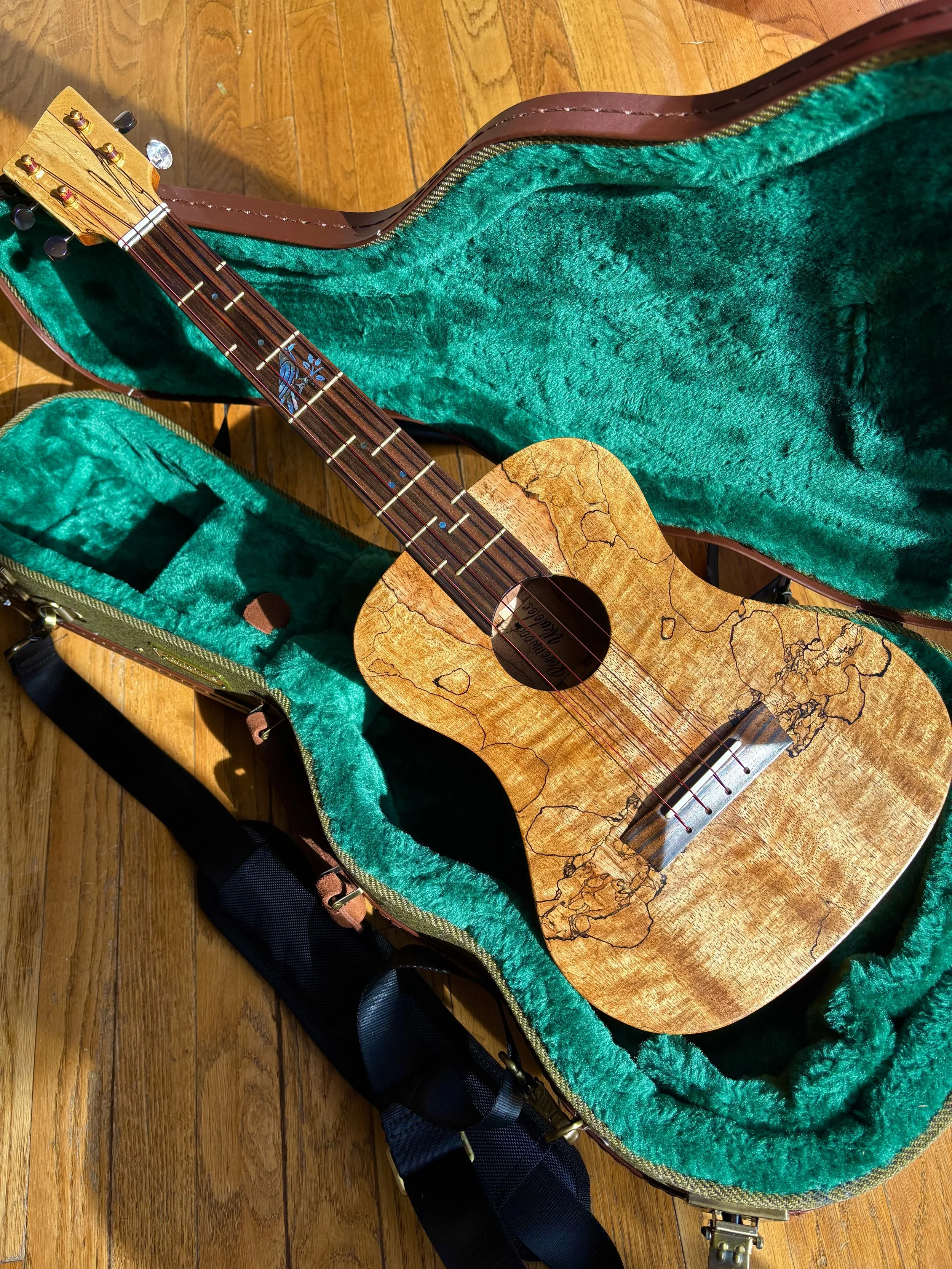
The Ravenwood Ukey is a 4-string instrument built around a one-key fretboard. Every available note belongs together, so you can strum, slide, pick, improvise, and explore while staying naturally in key.
Accessible by design. Expressive by nature.
Step by Step
1. Tune It Up
The current Ravenwood Ukey is designed in the key of C. Tuned GCEA, like a standard ukulele.
2. Explore the Fretboard
Because the note layout is selective, the fretboard keeps your movement musically connected.
3. Strum, Pick, and Slide
Single notes, simple rhythms, and sliding melodies stay cohesive and expressive.
4. Retune to Shift the Key
Tuning every string up or down moves the instrument by the same interval, allowing you to shift the key without changing the core playing experience.
5. Play Solo or Together
Multiple Ukeys can jam together, trade melodies, and build layered parts while staying in key.
How it Works
The Core Idea
The Ravenwood Ukey is designed around a simple idea: when every available note belongs together, players can focus more on making music and less on avoiding wrong notes.
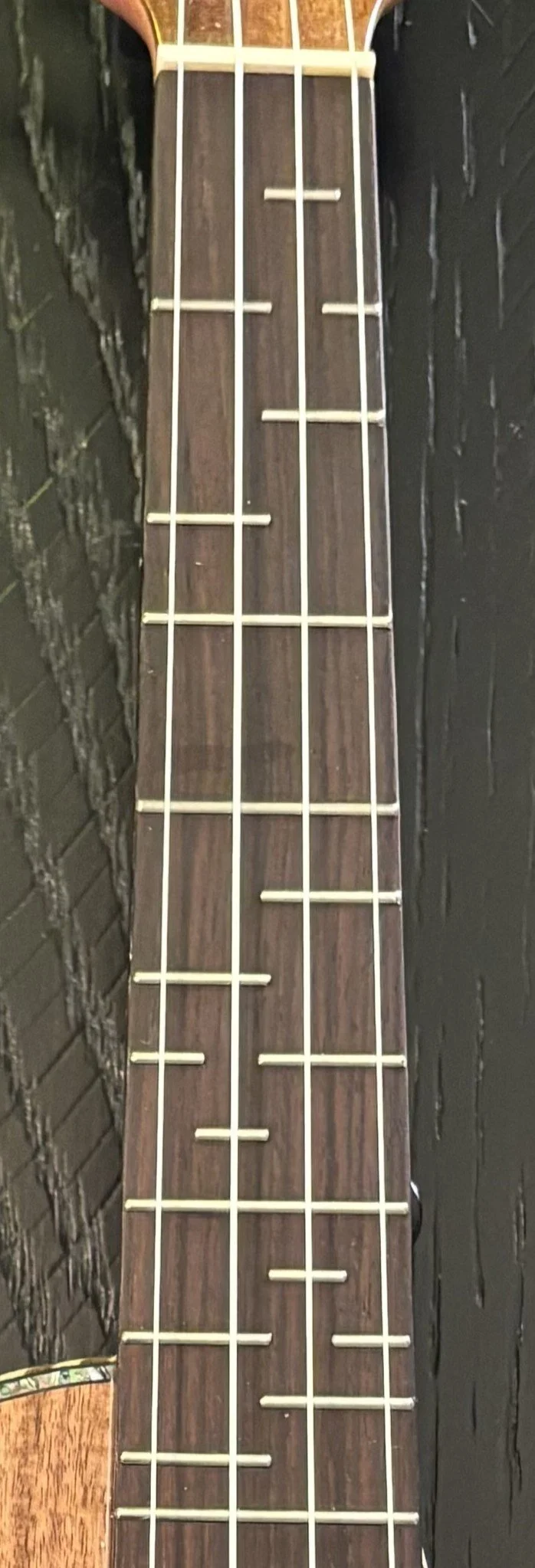
One-Key Fretboard
The fretboard is designed around a single key, so the available notes naturally work together.
Every Note Belongs
Players can move around the instrument more freely without constantly landing on notes outside the key.
Creative Freedom
Beginners can start quickly, while experienced players can use it for melody, rhythm, improvisation, and texture.
Why It Feels Different
Standard Ukulele
A standard ukulele uses a chromatic fretboard, which includes notes from many keys. This gives players a wide-open note map, but it also means beginners and casual players can easily leave the key by accident.
Key points:
Chromatic fretboard
Includes notes from many keys
More open-ended note map
Easy to leave the key by accident
Ravenwood Ukey
The Ravenwood Ukey uses a selective one-key fretboard. The available notes are designed to work together, making harmony, melody, improvisation, and group playing feel more natural.
Key points:
Selective one-key fretboard
Notes are designed to work together
Encourages musical exploration
Makes harmony and jamming feel more natural
Changing Keys
The current Ravenwood Ukey is built in the key of C, but the key can be shifted by tuning every string up or down by the same amount.
For example, tuning every string up a half step raises the instrument by a half step (Key of C#). Tuning every string down a half step lowers the instrument by a half step (Key of B).
This gives players flexibility while keeping the one-key design intact.
Who It’s For
Players
Jam, write, improvise, and discover new musical textures.
Songwriters
Use it to find hooks, layered parts, and melodic ideas quickly.
Teachers
Use it for rhythm, scales, ensemble playing, and creative learning.
Experienced Musicians
Explore sliding melodies, drone-style textures, layered recordings, rhythmic patterns, and new creative approaches.
Groups
Play together in classrooms, camps, workshops, family settings, and casual jam sessions.
Beginners
Start making musical sounds quickly without needing to understand every note, scale, or chord shape right away.
Built for Group Playing
One of the strongest uses for the Ravenwood Ukey is playing with others.
Because the notes are designed to work together, multiple players can create rhythms, trade melodies, layer parts, and improvise without the group constantly falling out of key.
This makes the Ukey useful for jam sessions, classrooms, workshops, camps, family music, homeschool groups, and creative ensembles.